Connect with Stelo
Purchase directly, work with an authorized reseller, or check out through your favorite cloud marketplace. Choose the path that fits your procurement process.
Where to Buy Stelo
Every organization buys software a little differently, so Stelo gives you options. Engage our team for a quick demo, spin up a no-obligation trial, and go live in under 24 hours when you buy direct. Or tap into our network of authorized resellers for local expertise and bundled services, with cloud-marketplace listings on the way to streamline billing and compliance.
Buy Direct from Stelo
Purchase from Marketplace
Find a Reseller
Schedule a Demo
Our expert consultants will guide you through the functionality of Stelo, using your intended data stores.
Try Stelo
Test the full capability of the software in your own environment for 15 days. No obligations.
Go Live
When you're ready, we can deploy your Stelo instance in under 24 hours with no disruptions to your operations.

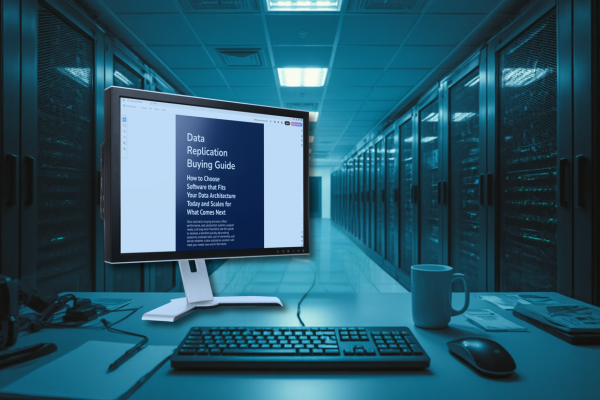
Data Replication Buying Guide
Choosing data replication software is about more than finding a tool that can move data. The wrong solution can create connector gaps, production load, rising costs, and avoidable rebuild work as requirements change.
Use our updated Data Replication Buying Guide to compare vendors with today’s data architectures in mind. The guide includes practical evaluation criteria, vendor questions, TCO considerations, trial guidance, and a companion worksheet to help your team compare solutions side by side.
- Define your buying criteria
- Compare vendor capabilities and pricing
- Track trial results and open questions

FAQ
The three primary pricing models are consumption-based (tied to data volume or transactions), core or seat-based licensing, and subscription-based tiered pricing. Stelo Data Replicator uses a tiered subscription model based on transaction volume rather than database size or consumption, enabling predictable, scalable costs without unexpected overages.
The CDC market includes a range of providers designed for different environments and use cases. Qlik and Striim are strong enterprise options but come with higher implementation complexity and costs that often miss the mark for smaller organizations. Fivetran performs well in cloud-to-cloud scenarios but struggles with legacy on-premise systems.
Stelo Data Replicator holds a distinct position in the market. Purpose-built for heterogeneous environments over 30+ years, it uniquely bridges legacy ODBC sources with modern non-SQL destinations—such as Snowflake, Databricks, and BigQuery—through a single platform without requiring additional connectors or licensing. With less than 1% CPU impact on production systems and no hard data caps, it delivers enterprise-grade CDC reliability without the typical overhead, cost, or architectural disruption.
For organizations running IBM Db2, Oracle, or SQL Server in on-premise or hybrid environments, Stelo Data Replicator provides real-time CDC with the continuity and stability that many cloud-native tools are not designed to support.
DbMoto licensing has traditionally been structured on a per-source or per-connection basis, with costs increasing as environments scale. With its June 2026 end-of-life approaching, organizations are actively seeking alternatives that avoid similar pricing limitations.
Stelo Data Replicator offers a tiered subscription model based on transaction volume rather than database size or number of connections. This approach enables predictable cost scaling and delivers a lower total cost of ownership compared to per-connection models.
For DbMoto users evaluating alternatives, Stelo Data Replicator serves as the closest architectural replacement—preserving replication logic through structured translation rather than requiring reengineering. Its pricing model is transparent, scalable, and built for long-term use, with no consumption metering, hidden fees, or surprises.
Join Our Partner Network →
Still Have Questions?
Need help deciding which buying option is right for your organization? Contact our team or schedule a call for personalized guidance.
